Author: Cindy Schersching, PhD

  • Avoiding Frauds and Scams: New Learning

    Avoiding Frauds and Scams: New Learning


    Scams and Frauds Are on the Rise

    Two years ago, the Council on Successful Aging offered a forum on how to avoid being taken in by scams and frauds. Pine Knoll Shores Police Chief Ryan Thompson and Financial Advisor Cheryl Mansfield from Edward Jones shared examples of scams and offered tips on how to avoid becoming a victim. Unfortunately, even in this short time span, the array and sophistication of these activities has increased.

    Very often intended victims are older people who may be more trusting or less familiar with technology. Scammers may contact you via email, text, phone (landlines and cell phones), U.S. mail and can even show up at your door. Scammers not only credibly misrepresent themselves and their business, they may also add the threat of loss or use fear tactics to induce compliance.

    Types of Scams

    Scams and frauds take a variety of forms (e.g., investment and imposter scams, online shopping issues) facilitated by digital tools that make it easier than ever to target victims. Recently released Federal Trade Commission (FTC) data show that consumers reported losing more than $10 billion to fraud in 2023.

    These numbers suggest that a lot of the fraud prevention advice being publicized may not be working. Michelle Singletary, an award-winning, long-time Washington Post personal finance columnist and author, has interviewed scores of victims and Doug Shadel, a fraud prevention expert who has spent much of his career studying scammers, summarized their insights and concluded that the current advice may be outdated. They shared their thinking in a December 2024 article appearing in the Carteret News Times newspaper.

    Scammers Are Credible Actors

    We easily believe in them; they can make the implausible seem plausible. They appear transparent, polite, respectful and have a lot of charisma. They may pretend to work for a respected agency—e.g., the IRS or Social Security. They may present themselves as authority figures—e.g., a sheriff or a known company executive. Their promises of strong financial benefits are difficult to dismiss.

    Alternatively, when threats of arrest or demands of payment in cash, gift cards, wire transfer or cryptocurrency raise anxieties or fears, we often quickly comply. Scammers who require you to transfer funds out of your bank/accounts “for your protection” can be alarming. If you find yourself in such a situation, it can be very difficult to think clearly and respond objectively.

    Most often we are told to resist the promises made by scammers by remembering: If it’s too good to be true, it probably is. While this is still a true statement, it’s effective only if one remembers it when they are approached. Build your resistance by considering the ideas listed below and adding them to your response set.

    What Can You Do?

    Stay alert…and be suspicious.

    • Scammers may try to rush you into a situation. Hang up.
    • Focus on an action that can be taken rather than try to remember a statement, e.g., ask for a return phone number of the company/person being represented. Reduce anxieties by reminding yourself to breathe.
    • Don’t believe anyone who urges you to move your money to “protect it.” Apply the same advice if someone tells you to buy gold, gift cards or cryptocurrency to protect your assets. Again, hang up or focus on an action.
    • Be aware that some scammers take time to build a relationship over several low-key, non-confrontational conversations to gain your trust. No matter how honorable someone may sound, resist sharing any personal financial information.
    • Educate yourself. Becoming familiar with different, often-used approaches by scammers and fraudsters will help reduce your anxieties should you actually be contacted. Rather than try to remember that you shouldn’t believe promises of extraordinary returns, build a base of understanding of how legitimate financial advisors operate. Review news stories, videos, and scam buster on YouTube to help build a knowledge base.
    • Receive consumer alerts about scams from the Federal Trade Commission and AARP Watchdog Alerts. Talk about these issues with friends and family. Help them be prepared. The FTC will send you alerts and updates to start these conversations in your preferred language and without charge.
    • The FTC wants to hear about scams in any language, even if you didn’t lose money: ReportFraud.ftc.gov (English speakers); ReporteFraude.ftc.gov (Spanish speakers); all other languages call 877-382-4357, press 3 and ask for an interpreter in your preferred language.

    The best protection against being scammed is to be prepared.

    Further Reading

    As Nationwide Fraud Losses Top $10 Billion in 2023, FTC Steps Up Efforts to Protect the Public | Federal Trade Commission, February 9, 2024.

  • Dementia and Aging: Key Facts for Pine Knoll Shores Residents

    Dementia and Aging: Key Facts for Pine Knoll Shores Residents

    Dementia is a progressive condition that affects memory, reasoning, communication, and daily functioning. Alzheimer’s disease is the most common form.

    This article on Understanding Dementia: Symptoms, Causes, Types, and Treatment explains the stages of dementia, from subtle early symptoms like losing track of time to later stages where individuals may become fully dependent on caregivers.

    It also highlights key risk factors such as age, genetics, cardiovascular health, and head injuries. Different types of dementia are outlined, including:

    • Alzheimer’s
    • Vascular dementia
    • Lewy body dementia
    • Fronto-temporal dementia

    While there is no cure for most forms, treatments can help manage symptoms. Lifestyle changes like healthy eating, exercise, and social engagement may reduce risk.

    For Pine Knoll Shores’ aging population, the information is especially relevant because dementia primarily affects adults over 65. Early recognition can make a significant difference in treatment and quality of life.

    Many residents are either at higher risk themselves or may become caregivers for a spouse, friend, or neighbor. The article offers both practical insight, such as the importance of early detection and healthy habits, and reassurance that supportive therapies and community resources exist.

    By raising awareness, it encourages proactive conversations and planning. This can help families navigate a challenge that touches many in this community.

  • Dementia Resources for Caregivers and Patients

    Dementia Resources for Caregivers and Patients

    A diagnosis of dementia is valuable when speaking to support agencies.

    You also need to be honest with yourself – especially if you are committed to being an at-home caregiver. Currently, there is no cure for dementia. Many family members choose to take on caregiver responsibilities – especially in the early stages of dementia’s development. As the disease progresses, continue to ask yourself these questions:

    • Do you have the skills and tools to take care of someone in this stage of Alzheimer’s?
    • What, if any, revisions do you need to make your home safe and comfortable – e.g., space for a hospital bed? Grab bars in the bathroom/shower?
    • As the disease progresses, can you keep up with the demands of care – physically, emotionally, mentally and financially? No two days will be alike. A good day today does not mean it will be a good day tomorrow.
    • Do you have friends/family you can rely on to help?
    • Is there someone who calls regularly to be sure all is o.k.?
    • Are you prepared to make different decisions, if in-home care becomes more difficult to deliver?

    Keep your knowledge of resources current. Date everything. Keep yourself healthy. It is o.k. to change your mind as you gain new information and updated experiences.

    Key notes

    Is your home as safe as you can make it…with proper lighting, rugs that don’t slip, security/alarms, etc. Our Pine Knoll Shores Police and Fire professionals are well prepared to review your home for safety issues and make suggestions. All this for free.

    Fire Department Jerry Bowden at 252-247-2268 or 252-247-2474, ext.30;
    Police Chief Ryan Thompson at [email protected] or 252-247-2474, ext.20

    Special needs? Medically fragile? Plan ahead for an emergency evacuation

    Have you notified public service people to be prepared to aid your evacuation in case of a major storm? See our website www.pkscouncilonaging.com for detailed information.

    24/7 Hotline 800 272 3900 is supported by the Alzheimer’s Association (E.N.C. Chapter, Raleigh)

    Pine Knoll Shores Council on Successful Aging

    Caregiver discussion groups

    Groups are not created equally.

    Many groups are not condition specific. That is, each group includes caregivers across different diagnoses, e.g., Parkinson’s, Alzheimer’s, or caregiving in general.

    The groups may meet in person or virtually.

    Morehead City – In person meeting
    First Presbyterian Church, 1604 Arendell – Carteret County
    This in-person caregiver group meets once a month on the 4th Thursday of the month at 11:30 to 1 pm. No charge.
    If the caregiver’s patient can be left alone for a while, the patient can sit in the parlor while the caregiver attends the group.
    The group also invites speakers to present information on specific topics related to caregiving in the home.

    Morehead City – Virtual group
    Via Zoom. Contact – January Brown moderator @ 252-638-3185, ext. 3011
    The group meets every Thursday at 1 p.m. Not dementia specific. No charge.

    Carteret County – Virtual group
    Via Zoom. Contact – Lauren Donnachie facilitator: [email protected]
    Group meets every Thursday at 1 p.m. All participants are caregivers of a loved one with some sort of dementia. Conversation leads into topics of discussion. The group also invites speakers to present information on specific topics related to caregiving in the home.

    New Bern – In person
    Contact Nancy Willett moderator @ 252-636-0831
    The group meets the 1st Wednesday of every month at 1 p.m. Not dementia specific. No charge.

    Patient support group: P.E.R.C. – Early Stages

    P.E.R.C. is a support group for individuals with Early Stages of Alzheimer’s or dementia; giving them the tools to navigate the disease with their caregivers.

    P.E.R.C. stands for:
    P – Peer Support
    E – Education
    R – Resources
    C – Caregiver Support

    At the support group, you will enjoy a safe atmosphere to converse with those who are in similar situations. The agency is currently taking names of those wishing to participate. Meetings for P.E.R.C. will meet the 3rd Thursday of each month at 10:00 am. The meetings will be held at the George Street Senior Center – 811 George St, New Bern, NC 28560; Please call 252-638-1790 with any questions and ask for Alissa. Website: Support Groups (weebly.com)

    Memory cafes

    Memory cafés, often called Alzheimer’s cafés, are welcoming social gatherings for people living with dementia and their family members, friends, and professional caregivers. Dr. Bere Miesen started the first café in Holland in 1997, and since then they have spread as a social movement throughout many countries. Cafés meet in many types of locations, such as libraries, community centers, restaurants, and houses of worship. Cafés should fit the interests, needs, language, and culture of their local community, so each café is unique. Their main purpose is to provide a welcoming, stigma-free social setting where people living with dementia and their care partners can meet others and enjoy time together. Cafés aim to decrease the social isolation that often accompanies dementia.

    Memory Café – Craven County
    Meets in person the 1st Monday of each month from 4-6:30 pm. Reservations are required for attendance. No charge.

    A unique Alzheimer’s/Dementia Support Group experience for caregivers and their loved ones. Session begins in a café style setting with dinner provided at 4:00 pm. The break away session begins shortly after dinner. Caregivers attend the support group, while trained staff members provide supervision to loved ones as they interact with their peer group during games and activities. Togetherness time at the end of the session provides activities the participant and the caregiver may work together to complete in a comfortable social setting.

    Reservation deadline is the last Friday of the prior month by noon. For more information contact us at 252 638-1790. The Memory Café is a part of Craven County Senior Services at 811 George Street, New Bern, NC.

    In home non-medical patient care: Home Helpers of the Crystal Coast

    Home Helpers of the Crystal Coast is a State of North Carolina licensed In-Home Care Agency providing non-medical services to individuals who need help to stay comfortably and safely in their own home as long as possible. These services also provide much needed respite for caregivers.

    Currently based in Morehead City, they operate in Carteret, Craven, Onslow counties providing these services:

    • Personal Care and Hygiene
    • Activities of Daily Living Assistance (ADLs)
    • Companionship
    • Light Housekeeping
    • Meal Preparation
    • Transportation and Errand Services (this can be a ‘standalone’ service as well)

    Special notes

    Long Term Care Insurance (LTC). LTC insurance covers these types of services. Home Helpers will assist those who have this type of insurance understand their benefits, file all paperwork on their behalf, and invoice and collect directly from the insurance carrier when applicable. They provide as much or as little assistance with this process at no additional charge.

    Veterans Benefits. As a VA Credentialed provider of the Homemaker and Home Health Aide Care Benefit (which many Veterans are unaware of), Home Helpers will explain these program benefits, how a Veteran would qualify AND support them throughout the submission of claims and approval process. For those that qualify, the VA will pay for in home care benefits with absolutely no cost to Veteran. One of Home Helpers top priority is helping veterans obtain the services they are entitled to.

    The Home Helpers team can be reached at 252-622-4690 – calls and texts reach all of their cellphones. Home Helpers will be moving their offices to 1615 Live Oak St. Beaufort, NC 28516 in the late summer/early fall. Service areas will not change.

    In home medical patient care: 3HC Home Health and Hospice Care

    3HC Home Health is a branch of medical and care services for those who need short-term acute care, but aren’t always able to leave their homes. Patient care includes services and procedures that were previously only available in hospitals. It is accredited by CHAP (Community Health Accreditation Partner) in addition to being Medicare and Medicaid certified. 3HC serves select counties in central and eastern North Carolina (including Carteret) from the Triangle area to the coast.

    3HC offers three main categories of home health services including:

    • Nursing and Aide Services – covers any medical procedures and treatments the patient requires.
    • Medical social work – approaches the emotional and social pressures of illness and injuries.
    • Rehabilitative therapies – tailored specifically to the patient’s needs. Hospitalization may prompt the need for rehabilitative therapies; surgery, disabilities, or even age-related circulation problems and arthritis can be helped through rehabilitation:
      • Physical therapy – often needed after an injury or illness.
      • Occupational therapy – similar to physical therapy, but concentrates on detailed movements of activities performed daily, like bathing, grooming, dressing, laundry, and meal prep.
      • Speech therapy – comprehensive addressing of problems associated with expression, from the need to physically swallow to the ability to speak more clearly.

    3HC is located in Goldsboro, NC at 2402 Wayne Memorial Drive. They can be reached at 1-800-692-4442.

    Physician specialists

    Gerontologists. A Google search of Carteret and Craven gerontologists yielded only one verified name – Dr. Amy Sue Charlesworth. When I called the number given, her voice message confirmed she works only with individuals who are patients of Crystal Bluffs long-term medical facility. She is also listed on the roster of the Carteret hospital. She can be reached at 252.725.9555.

    Dr. Robert John Fisher was initially identified as a gerontologist in Craven County. However, his current listing describes him as a Hospice, Palliative Care physician. He is associated with Craven Regional Hospital and Carolina East. Dr. Fisher can be reached at 252.514.2061.

    Wendy S. Fulford is a geriatric nurse practitioner at Craven Regional Hospital. She can be reached at 252.638.2273.

    Neurologists. A Google search identified several practicing neurologists in the area. Enter neurologists in Carteret County NC or neurologists in Craven County NC for a complete listing of choices.

    Tech tools to preserve a quality of life

    Dementia takes many forms and knows no social, economic or geographical boundaries. Many of these behaviors erode the quality of life for such patients and test the strengths of caregivers. A niche of forward-thinking companies/entrepreneurs have turned their attention to improving the quality of life of dementia patients shredded by the hours in the day. The impact is promising.

    The usefulness of these tools is related to the patients’ diagnostic stage as well as the caregivers’ comfort level with technology, i.e., just because a patient has a phone, there is no guarantee they will know how to use it if they find themselves alone.

    The innovations are mentioned here in the belief that the designs of such tools will continue to improve; technological advantages are fast paced. Therefore, the mention of these types of tools is brief and will depend on your need and interest to search for the most current versions.

    The Apple Watch

    (Applications may vary by choice of watch/generation model). Apple has led the way in the development of a multifunctional watch and is among the best known, but other brands boast similar offerings. Given the market prominence of the Apple brand, the Apple Watch is the one profiled here.

    Right out of the box, an Apple Watch can help keep you healthy, deliver notifications, make calls, send texts, run simple apps, and even save your life. Some versions can be Walkie-Talkies. The built in emphasis is on communicating quickly. The built in microphone facilitates its use.

    Importantly, critical medical notes can be accessed on the phone. If a patient is alone or incapacitated, this information can quickly direct EMS/medical professionals to the right course of action.

    In an emergency, the Apple Watch makes it fast and easy to call for help. All you need to do is hold down the side button for a few seconds until three options pop up. Sliding the SOS icon to the right will activate an emergency call. Regardless of where in the world you are, the Apple Watch will call the appropriate phone number for emergency services. While you may be used to dialing 911, the Apple Watch is smart enough to dial the proper number and even key in any confirmation number local authorities require.

    Not all of the watch functions are clearly of value to dementia patients and/or caregivers. However, it is worth mentioning that Apple Watches are also designed to keep the wearer healthy and safe by monitoring safe hearing levels and heart rates, taking an electrocardiogram, and tracking your fitness.

    The newest models include new compass layouts, improved medications reminders, better sleep tracking, and more dynamic watch faces. Available map apps can keep you from getting lost, improve your productivity, and entertain. Specific features and apps are dependent on the power/generation of the watch purchased.

    Google Home

    The North Carolina Eastern Council – Area Agency on Aging highlighted the value of the Google Home device as an assistance tool for older adults for home safety and routine management tasks (see: Google-Home-senior-info.-sheet.pdf (eccog.org)). Its value has extended beyond the general population to individuals with dementia.

    Google Home is a voice-controlled cloud-based voice service speaker that answers questions, plays music, delivers the news, delivers weather reports, makes calls, interacts with smart home devices and performs many other tasks. Google Home works through Wi-Fi and there are no monthly fees. Users must have Wi-Fi and a smartphone or tablet to set up devices.

    The emerging concept of aging in place supports older adults in their independence, socialization, and the right to choose to live at home and in their communities. With the growth of technology, aging in place is becoming more of a reality. Embracing technology allows individuals and their caregivers a resource for home safety and routine management. Devices allow individuals to communicate without a handheld device and with the ease of verbal commands, such as: asking questions; setting appointment/medication reminders; turning lights on/off; turning thermostat up/down; turning the television on/off; and making phone calls.

    Examples of specific questions to demonstrate how Google Home Assist can work begins with addressing the device, e.g., “Hey Google, what is Tylenol used for?” “Hey Google, call 252-121-3434,” “Hey Google, what time is it?” and “Hey Google, what day is it?”

    Further, Google Home’s broadcast feature enables users to use a Google home device, your phone, or a tablet to engage in two-way communication. Users can use the broadcast feature in another location, such as a parents’ home through a smartphone or tablet.

    To broadcast/intercom features among your devices, wake up your ‘personal assistant’ by saying, “Hey/Ok Google, broadcast”. The device will respond with “What’s the message?” Once you state your message (example: It’s dinner time), your message will then broadcast through all available devices. To send a reply requires the same sequence of voice commands. In this way, the ‘intercom’ acts as a two-way communicator like verbal texting.

    Before you use the broadcast feature on your smartphone or tablets you will be required to download and launch the free Google Home application.

    Once set up, the device can be used to establish, review and update shopping lists and to do lists, medication/appointment reminders, and make calls.

    Note: You cannot make calls to emergency services through the Google Home devices.

    Setup instructions and assistance can be found online.

    Additional examples of technology to help with dementia

    The benefit of light

    Sundowners’ syndrome is a condition where people with dementia experience agitation, aggression or restlessness before, during, and after sunset. While many of these behaviors start or worsen around sunset or sundown, this delirium can potentially occur at any time. Around 20% of people diagnosed with Alzheimer’s disease experience sundowning at some time.

    Light therapy can alleviate some of these symptoms by exposing someone to bright light for up to a few hours. Below are some options caregivers can try with their loved ones with sundowners:

    • Light therapy: Expose a person with sundowners to a bright fluorescent lamp for 1 to 2 hours in the morning to help reduce symptoms later in the evening.
    • Therapeutic lights or a lightbox: Use at strategic times of day and use bright lights in the room.
    • Increase indoor and outdoor lighting as it gets dark outside.
    • Try different types of light bulbs that have different lighting hues.

    The AAL Program

    The effects of dementia can be frightening and overwhelming for those living with it and the people who care for them. Examples of a forward-thinking company making a difference is AAL Program. The AAL Program aims to create better quality of life for older people and strengthen industrial opportunities in the field of healthy aging. The program funds projects that develop products and services that help older people and their caregivers to live more connected, independent, and happy lives.

    Many of the projects funded by the AAL Program aim to bring innovative products and services to these people in order to help reduce levels of stress and therefore improve quality of life. Some of these may not yet be available in the USA, but it is of value to know that they exist. (Check the AAL website to track their developments Projects Archive – AAL Programme (aal-europe.eu); some of these developments are reported at 5 Technologies that help people living with dementia b (healthtechzone.com))

    Below are additional examples of the types of technology that can help people living with dementia live more independent and happy lives.

    Position tracking aids – GPS trackers

    Dementia is an ailment that causes a person’s memory to deteriorate badly. As a result, some people suffering from dementia-related ailments may find it hard to remember previously familiar locations and routes – even in their homes. So, it is common for some adults living with dementia to wander.

    To avoid the troubles and worries that this might cause, GPS trackers can help caregivers easily tell where the patient is at any given time. Some popular names in the GPS tracker industry for dementia patients are SPOT, Spy Tec, iTraq, and Trackimo. Some trackers come as bracelets and are worn by the patient, while some can be placed in the patient’s shoes.

    Time-tracking aids – Easy-to-read clocks

    One of the symptoms common with people living with dementia is that they easily lose track of day and night. This can be frustrating for caregivers, especially if they have appointments or try to create a routine. To help curb this, there are easy-to-read clocks specially designed for people living with dementia.

    These clocks are common calendar clocks that display the time of the day, day of the week, and date. Furthermore, these digital clocks also identify morning, evening, or noon time periods. They’re user-friendly and are much easier to read than conventional clocks.

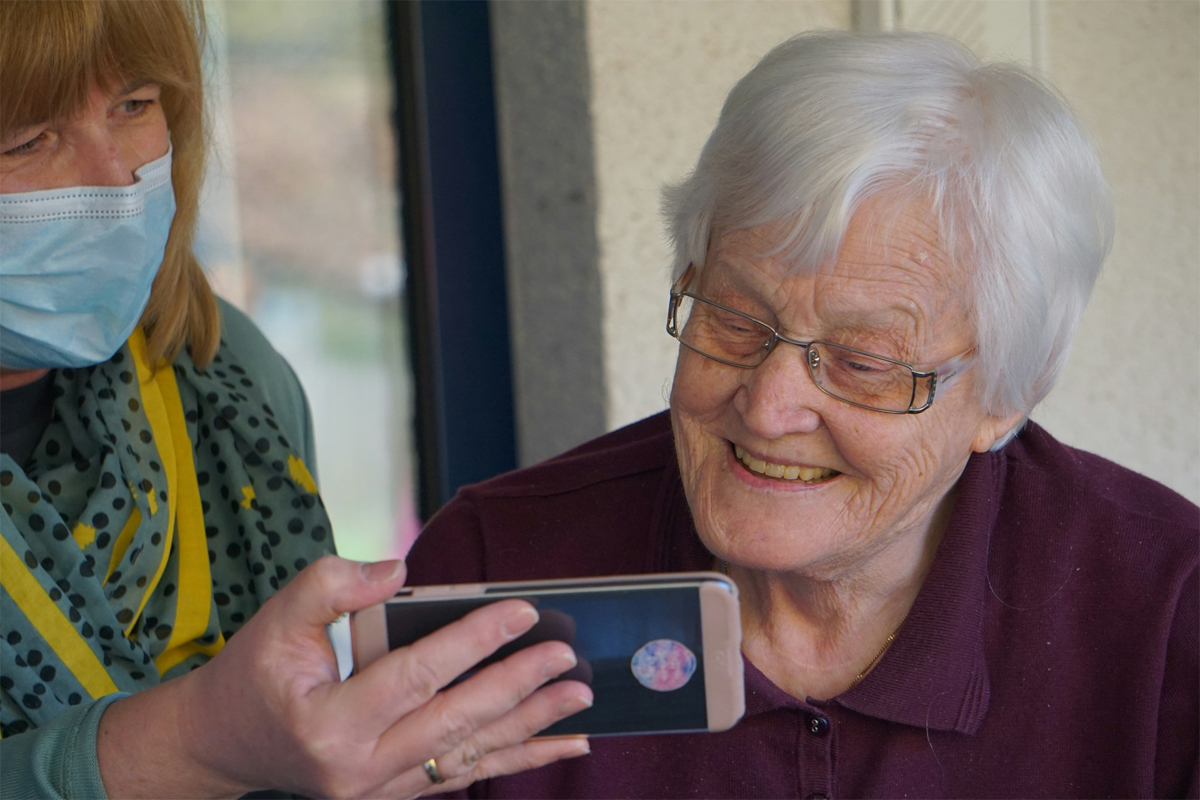
    Communication assisting technologies – Tablet computers and memory photo phones

    The memory loss symptoms of dementia can make an affected individual easily confused. This symptom, in most cases, makes it impossible for the patient to hold a chain of thoughts or conversation for long. Dementia patients can now use tablet computers to help them communicate better.

    The tablets come with apps built specially to help improve the quality of conversations dementia patients are capable of. Some of the apps that have been noted to have impressive results in this application are Inspire and Memory Keeper. Many of the technologies used in this aspect are focused on reminiscence activities.

    Memory photo phones are phones specially designed for people with memory disorders. This technology comes into play when the patient involved has difficulties remembering phone numbers. The phones come with many buttons and can be programmed to call frequently-dialed contacts.

    Also, some of these phones are equipped with clear buttons, which you can customize by placing pictures on them. This allows you to automatically call the person whose picture is on the button by pressing the button once.

    Electrical appliance use monitoring can alert caregivers if an appliance is left on or off too long.

  • PKS Council on Aging Meeting Minutes – July 2025

    PKS Council on Aging Meeting Minutes – July 2025

    July 8, 2025
    10:30 a.m.
    PKS Town Hall

    Call to Order: Cindy Schersching

    Agenda

    Old Business

    We had a great turnout for both forum events: May 15 – Caregiving and June 9 – Dementia. While a limited number of Council members attended our regular meeting, we had a good discussion of what worked, what didn’t work as well as we thought, and what’s next.

    Two strong follow-up ideas emerged:

    • Host a round table with several local experts to discuss caregiving and dementia resources, community ties, and ways to expand the support network.
    • Host a round table with community members who are living with caregiving challenges to explore neighbor-to-neighbor resource sharing.

    The discussion also touched on the lack of specialists at our local hospital, even with the Mayo Clinic connection. This remains a barrier to aging in place. One step forward may be to invite key hospital personnel to participate in future discussion groups.

    New Business

    • Communications across COSA and to the community: John Clarke suggested using USPS postcards. He and Cindy will review this option.
    • Interest in inviting back Angela Pridgen, Lead Ombudsman with the Area Agency on Aging, for a forum on patient rights and long-term care placement guidance.
    • Zoom forums: The Town does not have resources to support Zoom access.
    • Expanding exercise options is still under consideration. What classes should be offered? Do we have participant input?
    • John Macheca identified Nacho’s in Atlantic Station as a social gathering place, replacing Hotel Alice.
    • Exploring the concept of incorporating “age friendly” standards into COSA activities. Volunteers are needed to initiate this approach.

    Minutes

    Ongoing Business

    Continued discussion on the lack of specialists at Carteret General Hospital, even with the Mayo Clinic connection. This issue again became evident when a PKS resident was unable to receive appropriate specialist care. Transport to New Bern was not facilitated. This situation is not uncommon and remains a serious concern.

    Two follow-up ideas were proposed:

    • Host a round table with medical professionals to discuss resource availability, strengthening community ties, and ways to better support caregivers.
    • Host a round table with community members living with caregiving challenges to explore resource sharing and mutual support.

    A list of potential hospital board and foundation contacts was circulated. Members were encouraged to reach out where they had personal connections. Several individuals were identified as possible participants, including Dr. Brooks, Mary Carlyle Brown, Kathy Driver’s contacts on the Hospital Foundation Board, and PA Sara Bedard.

    New Business

    Expanding exercise options remains a priority. Chair yoga had 13 participants last week. Leon Mann Center has agreed to fund community training for a new Tai Chi instructor, as the current instructor may be lost.

    Agreement to use Nacho’s in Atlantic Station as the new social gathering place, replacing Hotel Alice.

    Agreement to invite back Angela Pridgen, Lead Ombudsman with the Area Agency on Aging, for a forum in the fall focused on patient rights and long-term care placement.

    Our next meeting is August 12, 2025 at 10:30 a.m. in the Betty Carr Room of the A.C. Hall Municipal Building.

  • PKS Council on Aging Meeting Minutes – June 2025

    PKS Council on Aging Meeting Minutes – June 2025

    June 10, 2025
    10:30 a.m.
    PKS Town Hall

    Call to Order: Cindy Schersching

    Agenda

    Old Business

    Continue to focus on updating/adding to service and medical professional lists for currency and accuracy in order to be on and promoted on our website. This is important as these lists are unique to us, PKS has established a link to us, and Shoreline pages are being reduced. Who will help?

    Continue the discussion of Time Banking. Kathy Driver to present information on software requirements.

    New Business

    We hosted two forums since our last meeting. Confirm they were videotaped and refreshments served.

    Event notices appeared on our FB page and in the Be in the Know Town newsletter. We had a great turnout for both. What worked? What didn’t work?

    • May 15 – Caregiving
    • June 9 – Dementia
    • Zoom forums?
    • Expanding our exercise options is still a possibility. What classes should we focus on?
    • Senior companions – looking for volunteers.
    • Website being revised.
    • Nacho’s restaurant – our new gathering place (John Macheca).
    • Our survey…call for ideas/questions.
    • What else should we be doing?

    Minutes

    Old Business

    We had a great turnout for both forum events: May 15 – Caregiving and June 9 – Dementia. While a limited number of Council members attended our regular meeting, we had a good discussion of what worked, what didn’t work as well as we thought, and what’s next.

    Two strong follow-up ideas emerged:

    • Host a round table with local experts and invite the community to discuss available resources, strengthen ties, and expand knowledge for caregivers.
    • Host a round table with community members who are living with caregiving challenges. Explore ways to pool resources across households to fill gaps in care.

    The discussion also touched on healthcare resources in general and the lack of specialists at our local hospital, even with the Mayo Clinic connection. This remains an obstacle to aging in place in Pine Knoll Shores. One possible step is to invite hospital personnel to join future discussion groups.

    New Business

    • Communications: John Clarke suggested using USPS postcards for community outreach. He and Cindy will review this option.
    • Discussion of whether to invite back Angela Pridgen, Lead Ombudsman with the Area Agency on Aging, for a forum on patient rights in long-term care facilities and guidance for families making placement decisions.
    • Zoom forums: The Town does not have resources to provide Zoom access for forums.
    • Expanding exercise options is still being considered. What classes should we focus on, and do we have input from participants?
    • John Macheca identified Nacho’s in Atlantic Station as a new social gathering place, replacing Hotel Alice.
    • Explore adopting “age friendly” standards into COSA activities. Volunteers are needed to help initiate this.

    Our next meeting is August 12, 2025 at 10:30 a.m. in the Betty Carr Room of the A.C. Hall Municipal Building.

  • PKS Council on Aging Meeting Minutes – May 2025

    PKS Council on Aging Meeting Minutes – May 2025

    May 13, 2025
    10:30 a.m.
    PKS Town Hall

    Call to Order: Cindy Schersching

    Agenda

    Old Business

    • Continue to focus on updating/adding to service and medical professional lists for currency and accuracy in order to be on and promoted on our website. This is important as these lists are unique to us, PKS has established a link to us, and Shoreline pages are being reduced. Who will help?
    • Continue the discussion of Time Banking. Kathy Driver to present information on software requirements.

    New Business

    • We are hosting two upcoming forums. Confirm these will be videotaped and refreshments served. Attendance is not limited to PKS. Event notices appear on our FB page; please share them on your FB pages. We want great attendance.
      • May 15 – Caregiving
      • June 9 – Dementia
    • John Clarke will be doing 1 minute videos of Police and Fire programs that are offered to the community. Need to confirm dates for filming.
    • Expanding our exercise options is still an option. What classes should we focus on?
    • Our survey…call for ideas/questions.
    • What else should we be doing?

    Minutes

    Old Business

    • Help needed to expand benefits to the community and status of new opportunities for the group to engage more people. Our list of recommended service people and medical professionals is unique and underutilized. Let’s focus on updating/adding to these lists in 2025, raising awareness they exist, and getting/publicizing feedback.
    • It’s been 1 – 1.5 years since we put these lists together. We need to review them for accuracy and update the information before they can be published and promoted on our website. This is an ongoing request.
    • Continue the discussion of Time Banking when Kathy Driver is available to provide more information on software requirements.

    New Business

    • Linda Langheld presented a forum on Caregiving. It was very well attended and she shared valuable, practical information.
    • In June, we have January Brown from the Eastern Carolina Council; her responsibilities include Coordinator for the Area Agency on Aging (ECC-AAA). Ms. Brown will present a forum on dementia. Her experience, expertise, and tools speak to how sensory inputs are perceived by individuals with dementia. She will share her knowledge on the best ways to work with and relate to this group.
    • We have been asked to Zoom specific forums. Since the COSA doesn’t have a Zoom account, we would be limited to only 45 minutes. While the Town also doesn’t have a Zoom account we could borrow, it does have a means to transmit the forum. Missy spoke to John Clarke about how we could utilize this tool.
    • Promoting our website. The website for the Town of Pine Knoll Shores and the Council on Successful Aging are now linked.
    • Council members assisted the Easter Bunny in filling eggs with candy for the Easter Egg roll at Garner Park this year. Many thanks to all of the volunteers.
    • With new management, Hotel Alice is being dropped from our partnership list. They appear to have little interest in maintaining a relationship with us. John Macheca has reached out to the Mexican restaurant Nacho’s in Atlantic Beach Station who are interested in being a gathering place for us. John will keep us informed as this relationship develops.
    • A survey of PKS seniors is being developed. Everyone is encouraged to contribute their ideas/questions.

    Our next meeting is June 10, 2025 at 10:30 a.m. in the Betty Carr Room of the A.C. Hall Municipal Building.

  • PKS Council on Aging Meeting Minutes – April 2025

    PKS Council on Aging Meeting Minutes – April 2025

    April 8, 2025
    10:30 a.m.
    PKS Town Hall

    Call to Order: Cindy Schersching

    Agenda

    Old Business

    Help needed to:

    Expand benefits to the community and status of new opportunities for the group to engage more people. Our list of recommended service people and medical professionals is unique and underutilized. Let’s focus on updating/adding to these lists in 2025, raising awareness they exist, and getting/publicizing feedback.

    It’s been 1 – 1.5 years since we put these lists together. We need to review them for accuracy and update the information before they can be published and promoted on our website.

    Continue the discussion of Time Banking. Kathy Driver to get more information on software requirements.

    Note on Assistive Devices closet: We will not pursue this, but the public should know that the First Presbyterian Church maintains such a closet at 1604 Arendell St, Morehead City, NC 28557, 252-247-2202. Equipment lending is open to all. Call for hours. They do not deliver.

    New Business

    • Publication of the list of nonprofit agencies in Carteret County will appear in May’s Shoreline and will reside on our website. They represent volunteer opportunities.
    • Upcoming forum: The topic to be presented is Caregiving. Have we locked in a date, time?
    • Promoting our website – PKS has established a link to us.
    • Need to review/update list entries currently on the website.
    • Who will help?
    • Council members assisted the Easter Bunny in filling eggs with candy for the Easter Egg roll at Garner Park this year.
    • Our survey…call for ideas/questions.
    • Volunteer appreciation: Let Missy Shine know by April 18 if you will attend.

    Minutes

    Old Business

    Help needed to:

    Expand benefits to the community and status of new opportunities for the group to engage more people. Our list of recommended service people and medical professionals is unique and underutilized. Let’s focus on updating/adding to these lists in 2025, raising awareness they exist, and getting/publicizing feedback.

    It’s been 1 – 1.5 years since we put these lists together. We need to review them for accuracy and update the information before they can be published and promoted on our website.

    Continue the discussion of Time Banking. Kathy Driver to get more information on software requirements.

    Note on Assistive Devices closet

    We will not pursue this, but the public should know that the First Presbyterian Church maintains such a closet at 1604 Arendell St, Morehead City, NC 28557, 252-247-2202. Equipment lending is open to all. Call for hours. They do not deliver.

    New Business

    • Publication of the list of nonprofit agencies in Carteret County will appear in May’s Shoreline and will reside on our website. They represent volunteer opportunities.
    • Upcoming forum: The topic to be presented is Caregiving. Have we locked in a date, time?
    • Promoting our website – PKS has established a link to us.
    • Need to review/update list entries currently on the website.
    • Who will help?
    • Council members assisted the Easter Bunny in filling eggs with candy for the Easter Egg roll at Garner Park this year.
    • Our survey…call for ideas/questions.
    • Volunteer appreciation: Let Missy Shine know by April 18 if you will attend.

    Next meeting

    Our next meeting will be May 13, 2025 at 10:30 a.m. in the Betty Carr Room of the A.C. Hall Municipal Building.

  • PKS Council on Aging Meeting Minutes – March 2025

    PKS Council on Aging Meeting Minutes – March 2025

    March 11, 2025
    10:30 a.m.
    PKS Town Hall

    Call to Order: Cindy Schersching

    Agenda: Old Business

    The PKS Council on Aging needs help to:

    Expand benefits to the community and status of new opportunities for the group to engage more people. Our list of recommended service people and medical professionals is unique and underutilized. Let’s focus on updating/adding to these lists in 2025, raising awareness they exist, and getting/publicizing feedback.

    It’s been 1 – 1.5 years since we put these lists together. We need to review them for accuracy and update the information before they can be published and promoted on our website.

    Confirm contact numbers for county nonprofits and publish these as volunteer opportunities in the Shoreline, Facebook, our website.

    • Continue the discussion of Time Banking. Is this something we want to pursue?
    • Continue the discussion of creating an Assistive Devices closet. Is this something we want to pursue?

    New Business

    • Upcoming forums.
    • Evaluate/rate the accessibility of handicapped rest rooms in local restaurants and publish our findings.
    • Care giver placement.
    • Promoting our website – PKS has established a link to us.

    Other possibilities?

    • Organizing a ‘cook’s night out’ or a progressive dinner.
    • Should we have specific offerings that could benefit those who are living alone? Ideas?
    • Bring a friend to meetings, forums, PARC activities.
    • Promote ‘socials’ at local locations.
    • Different meeting format?

    Minutes

    We reviewed our recent efforts:

    Reiterated the unique value of recommended service people and medical professionals asked for help to update this list – especially to confirm the recommended individuals were still in place. Also hope to expand the lists with additional references. Once done, we will push to raise awareness of the lists and our website.

    Shoreline publication

    Confirmed the currency of county nonprofits for publication/publicity as volunteer opportunities in the May Shoreline, current Facebook, our website.

    Time banking

    Continued the discussion of Time Banking. Is this something we want to pursue? It was decided that the idea had merit and that Kathy Driver to present more information on the software requirements to set this up.

    Assistive devices closet

    Concluded the discussion of creating an Assistive Devices closet. The First Presbyterian Church in Morehead City has an Assistive Devices closet already successfully established. While this was not on the island, it was determined there was no compelling reason for us to set up our own closet when our residents had access to the church’s.

    Group social engagement

    We continue to stress the need to attract those who are living alone and want more social opportunities. No specific events were suggested though emphasis should be on Bring a friend to meetings, forums, PARC activities and help promote ‘socials’ at local locations.

    Next meeting

    Our next meeting will be April 8, 2025 at 10:30 a.m. in the Betty Carr Room of the A.C. Hall Municipal Building.

  • PKS Council on Aging Meeting Minutes – February 2025

    PKS Council on Aging Meeting Minutes – February 2025

    February 11, 2025
    10:30 a.m.
    PKS Town Hall

    Call to Order: Cindy Schersching

    Agenda: Old/New Business

    Annual Board Retreat: LAST CALL FOR ADDITIONAL IDEAS?

    Thursday and Friday, February 13 (full day) and 14 (half day) at the Trinity Center Beach House. All are invited. If you would like lunch on the 13 let Missy Shine know: 252-247-4353 ext. 13.

    Preparation

    We will be reporting to the BOC and other agency heads:

    • What we have accomplished/improved upon in 2024.
    • What we plan/hope to accomplish in 2025.
    • What we need to accomplish our 2025 goals.

    Ongoing

    We didn’t get time to adequately discuss the ideas below:

    • Expand benefits to the community and status of new opportunities for the group to engage more people. Our list of recommended service people and medical professionals is unique and underutilized. Let’s focus on updating/adding to these lists in 2025, raising awareness they exist, and getting/publicizing feedback.
    • A variation of the service people listing that could be useful is the establishment of a “Time Bank.” With this design participants offer a service to the community and the estimated time it takes to perform it; the service + time are banked and can be exchanged for a service they need, e.g., baking a pie might bank 1.5 hours which can be used toward 1.5 hours of power washing.
    • There are software packages available to facilitate this – Kathy Driver will share her experiences.

    New ideas mentioned for further discussion

    • A book club; a ‘cook’s night out’; a progressive dinner.
    • Broadening our participation in activities offered by St. Francis by the Sea? The Leon Mann Center?
    • There are several in our community who are living alone. Should we have specific offerings that could benefit this group? Ideas?
    • Is there interest in creating and maintaining a ‘Assistive Devices Closet’? This would require an inventory of medical devices – e.g., walkers, wheelchairs, etc. – created through donations. If there a resident has a need of a device, they can get one on loan from ‘the closet’.
    • There may be cost implications to this offer.

    In order to offer this service, at a minimum, we would need donations, a space to keep the devices, someone to pick up the donation, someone willing to clean up donated items, and a point person to call to confirm a device is available, arrange for pick up/delivery and keep track of devices loaned.

    Kathy Driver agreed to be the Council’s representative on the Eastern Carolina Council (ECC). ECC is a multi-county, local government, planning and development organization serving local governments in 9 counties in our region through regional initiatives, projects, resources, and technical assistance.

    Minutes

    Time Banking

    Time Banking was suggested as an adjunct to our list of services provided or as a stand-alone separate community program. Kathy Driver explained how time banking typically works:

    Everyone’s time is valued equally; the program is an exchange of abilities, not money, i.e., one hour. of service is earned and is equal to any other hour of service. Labor-time units can be credited to a person’s account in the time bank and redeemed for services from other members of the time bank. Typically, the most often traded services are simple, low market-value tasks, such as the care of the elderly, social work, and home repair; the time bank puts a value on retired activities.

    A trademarked software package is available to run the program, however, the program needs a coordinator to run the software, and possibly an oversight committee.

    With a minimum of three people, time banks can be linked. The time bank links can be made across any distance, e.g. NC and FL.

    Assistive Devices/medical devices closet

    Establishment of an Assistive Devices/medical devices closet was also under discussion.

    The idea behind this initiative is to collect physician-issued mobility equipment that is no longer needed by the patient (e.g., wheel chairs, crutches, boots, canes, etc.) and make these items freely available to others in need.

    There are several challenges to establishing a program like this, including, but not limited to:

    • Finding storage: We will need to find a dedicated space.
    • A dedicated coordinator who will maintain an inventory of items coming in and going out.
    • A sanitation process for all equipment received and stored.
    • Dedicated individuals to pick up and deliver on requests.
    • Assurances that any equipment loaned out is in top, working condition. Failure to do this would make us liable for any issues that could be associated with imperfect equipment. PKS EMS could provide guidance on how to we could proceed.

    Alternatively, if an Assistive Devices closet is currently operating on the island, we could offer our support. It would be worthwhile checking with local churches and the Leon Mann Center to identify sources and explore interests in working together.

    Other group socializing ideas

    • Organizing a ‘cook’s night out’ or a progressive dinner.
    • Should we have specific offerings that could benefit those who are living alone? Ideas?
    • Bring a friend to meetings, forums, PARC activities.
    • Promote ‘socials’ at local locations.

    Next meeting

    Our next meeting is Tuesday, March 11, 2025 at 10:30 a.m. in the Betty Carr Room, A.C. Town Municipal Building.

  • PKS Council on Aging Meeting Minutes – January 2025

    PKS Council on Aging Meeting Minutes – January 2025

    January 14, 2025
    10:30 a.m.
    PKS Town Hall

    HAPPY NEW YEAR!

    Call to Order: Cindy Schersching

    Agenda: New Business

    Board Retreat Participation

    Thursday and Friday, February 13 (full day) and 14 (half day) at the Trinity Center Beach House. All are invited. If you would like lunch on the 13 let Missy Shine know: 252-247-4353 ext. 13.

    Preparation

    We will be reporting to the BOC and other agency heads:

    • What we have accomplished/improved upon in 2024.
    • What we plan/hope to accomplish in 2025.
    • What we need to accomplish our 2025 goals.

    Old/New Business

    Status of new opportunities for the group to engage more people and expand benefits to the community

    Of the events/activities under discussion – Movie Nights, participation in Leadership Carteret, and adoption/inclusion of elements of the Connecticut group Staying Put in New Caanan – only Movie Nights held some interest.

    Cindy spoke with the Manager of the Atlantic Station Cinema 3/4 weeks ago and reviewed potential mutual benefits. In exchange for increasing publicity for the films shown, an incentive of a drink + popcorn ‘bundle’ given to PKS residents was most likely. There has been no word that the owner has further interest.

    Service Provider list

    Our list of recommended service people and medical professionals is unique and underutilized. Let’s focus on updating/adding to these lists in 2025, raising awareness they exist, and getting/publicizing feedback.

    Time Bank

    A variation of the service people listing that could be useful is the establishment of a “Time Bank.” With this design participants offer a service to the community and the estimated time it takes to perform it; the service + time are banked and can be exchanged for a service they need, e.g., baking a pie might bank 1.5 hours which can be used toward 1.5 hours of power washing.

    There are software packages available to facilitate this. Kathy Driver will look into it and report back to us.

    New ideas were mentioned for further discussion

    • A book club; a ‘cook’s night out’; a progressive dinner.
    • Broadening our participation in activities offered by St. Francis by the Sea? The Leon Mann Center?
    • There are several in our community who are living alone. Should we have specific offerings that could benefit this group? Ideas?

    Assistive Devices Closet

    Is there interest in creating and maintaining a ‘Assistive Devices Closet’? This would require an inventory of medical devices – e.g., walkers, wheelchairs, etc. – created through donations. If there a resident has a need of a device, they can get one on loan from ‘the closet’.

    There may be cost implications to this offer.

    In order to offer this service, at a minimum, we would need donations, a space to keep the devices, someone to pick up the donation, someone willing to clean up donated items, and a point person to call to confirm a device is available, arrange for pick up/delivery and keep track of devices loaned.

    Meeting Minutes

    Attendees: Ann Bures, John Clarke, Karen Murphy, Kathy Driver, Clark Edwards, Michelle Powers, Cindy Schersching, John Brodman.

    Call to Order: Cindy Schersching

    Prepare for PKS Offsite for All Committees — What Do We Want to Emphasize in Coming Year

    Fitness Classes later in the day

    From Cindy

    • Updated survey to determine what we want/need.
    • Broaden awareness base.
    • Increase number of dedicated volunteers.
    • Continue work to have a voice with local hospital.
    • What are the opportunities at a worker bee level to provide input for PKS.
    • Community Center.
    • Transportation to Leon Mann Center.

    Volunteers in Community Service

    Primarily used during hurricanes.

    Association of Rural Hospitals

    Eastern Carolina Council of Governments

    Clark Edwards is the current PKS representative to the Eastern Carolina Council of Governments.

    There are multiple opportunities to learn about what is going on and what resources are available to us.