
FALLS IN OLDER ADULTS
WHAT IS A FALL
A sudden, unintentional descent, with or without injury to the patient, that results in the patient coming to rest on the floor, on or against some other surface
WHY FALLS MATTER
It is a leading cause of injury for adults 65+
Can result in fractures, head injuries, and loss of independence
1-year mortality rate after hip fracture is 22%
Even minor falls increase fear of falling and reduce activity levels
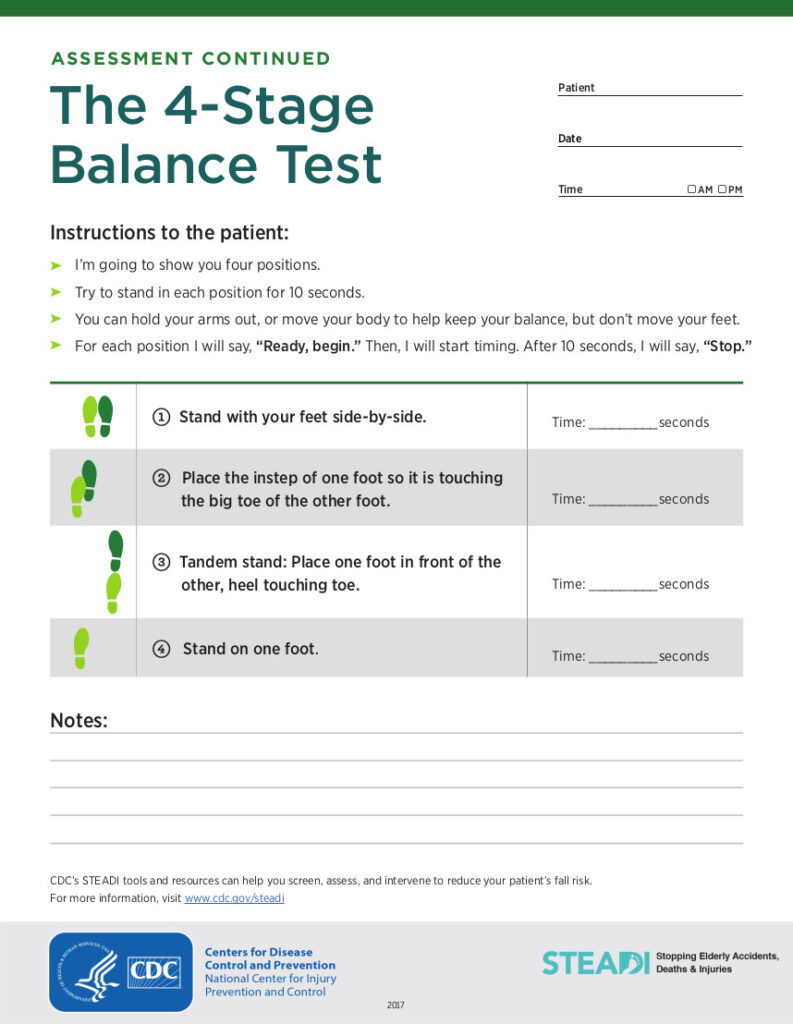
BALANCE SYSTEM
Vision
Proprioception
Vestibular (inner ear)
WHO IS MOST AT RISK
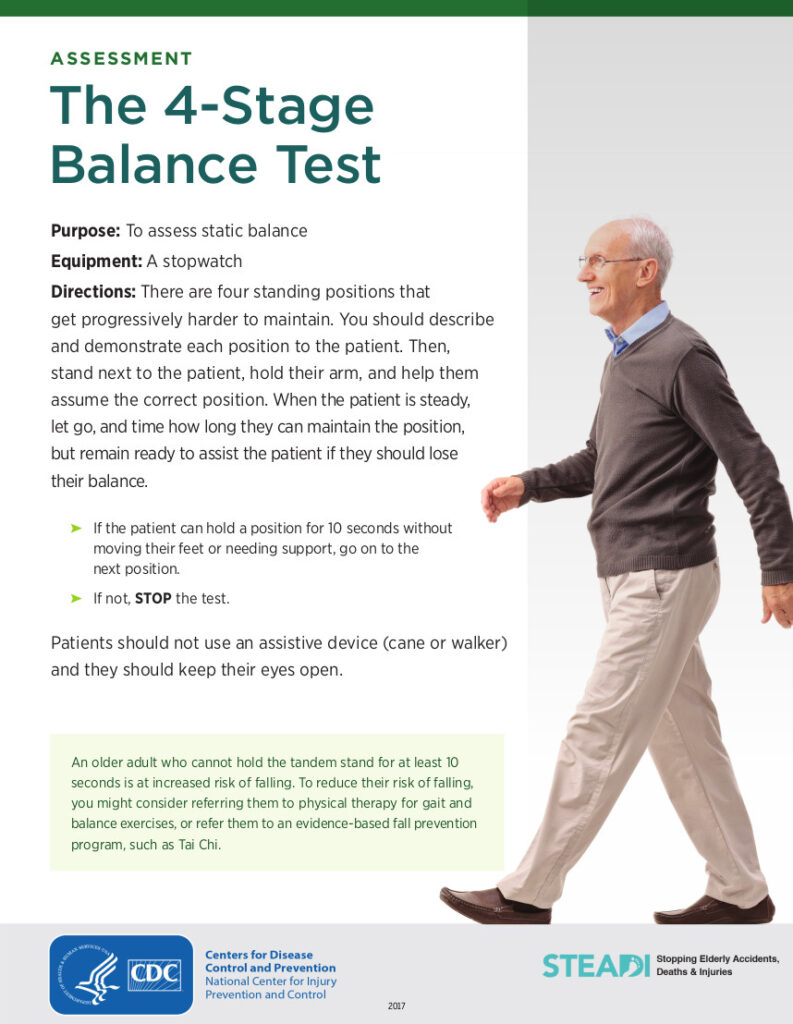
•Anyone who has had a recent fall
Individuals with vision or hearing changes
People taking multiple medications
Those with chronic conditions (arthritis, diabetes, heart disease, neuropathy)
Anyone who is fearful of falling
Sedentary
•Decreased strength
Vertigo•
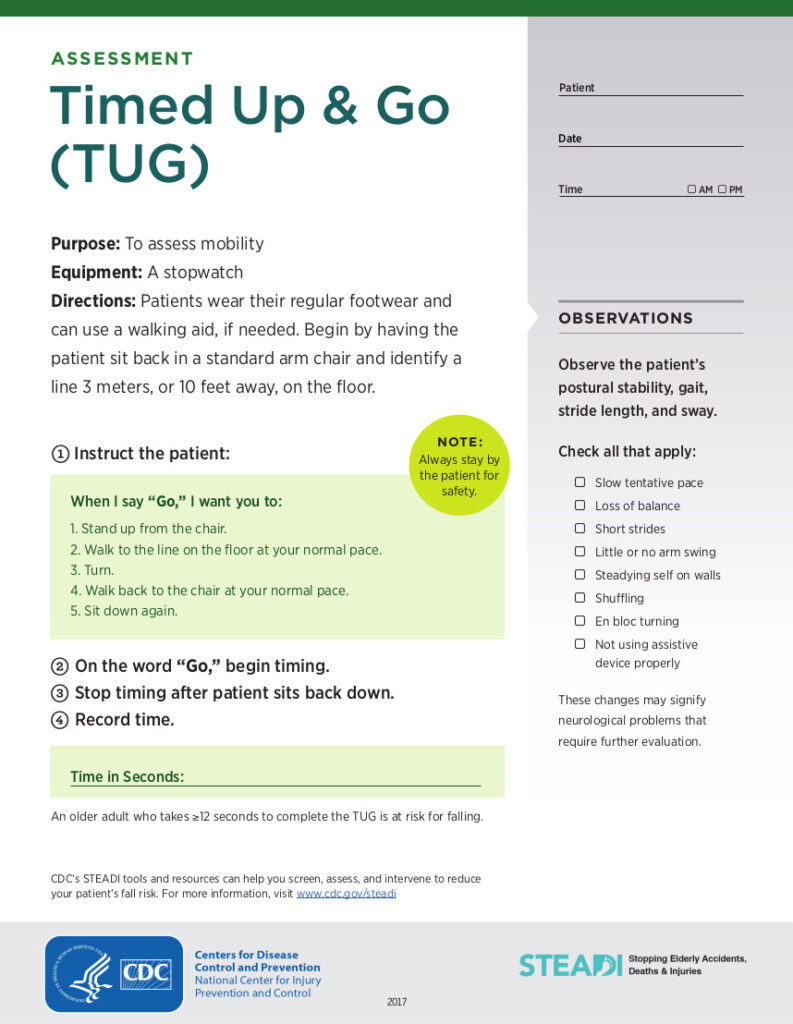
Check Your Risk for Falling Worksheet (>4 = increased fall risk)
WARNING SIGNS
•Feeling unsteady
Holding onto furniture while walking
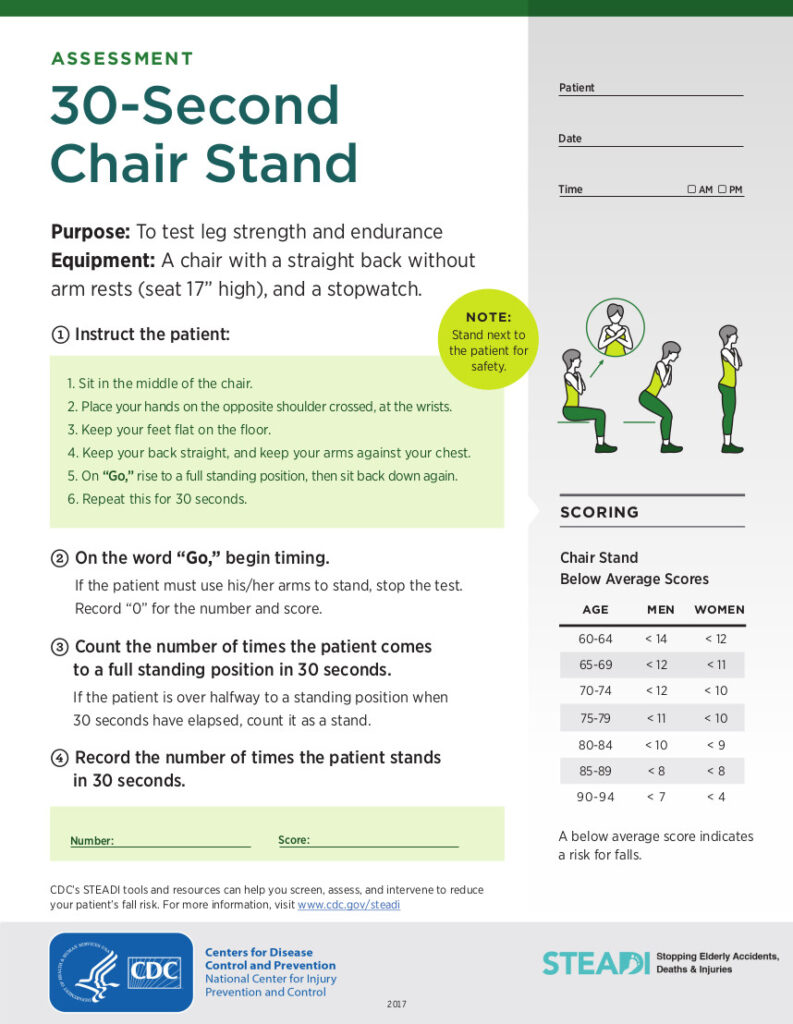
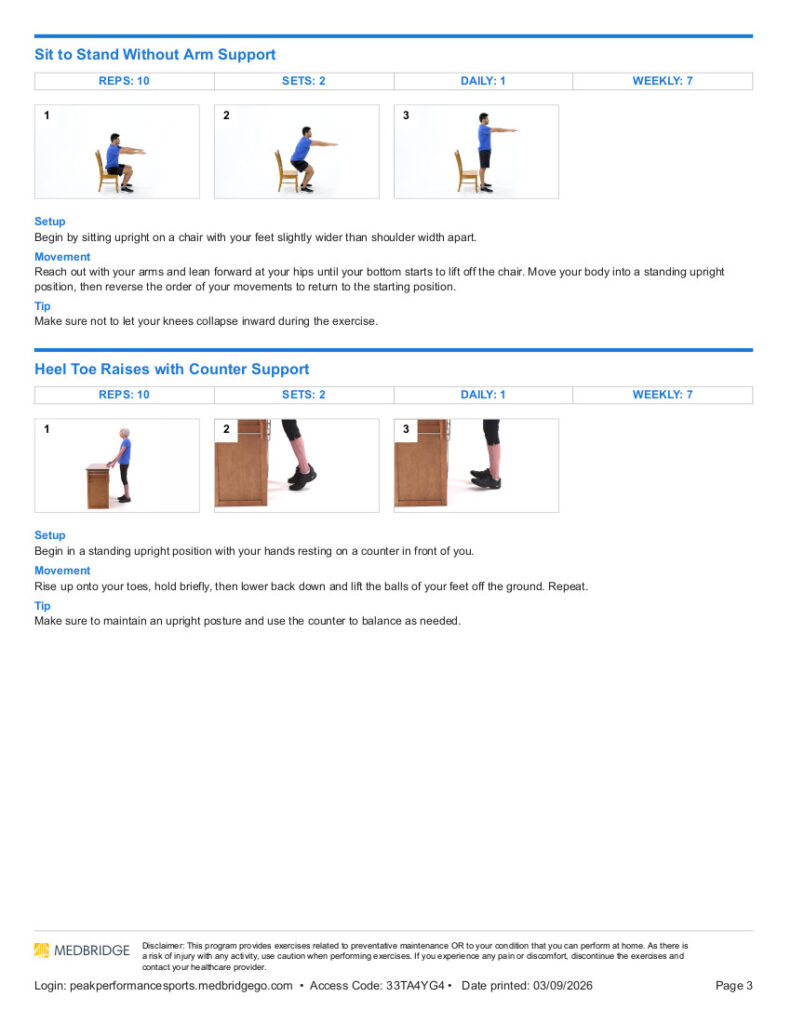
Trouble standing up from a chair
•Recent fall or “near‐fall”
Avoiding activities due to fear of falling
HOW TO PREVENT FALLS
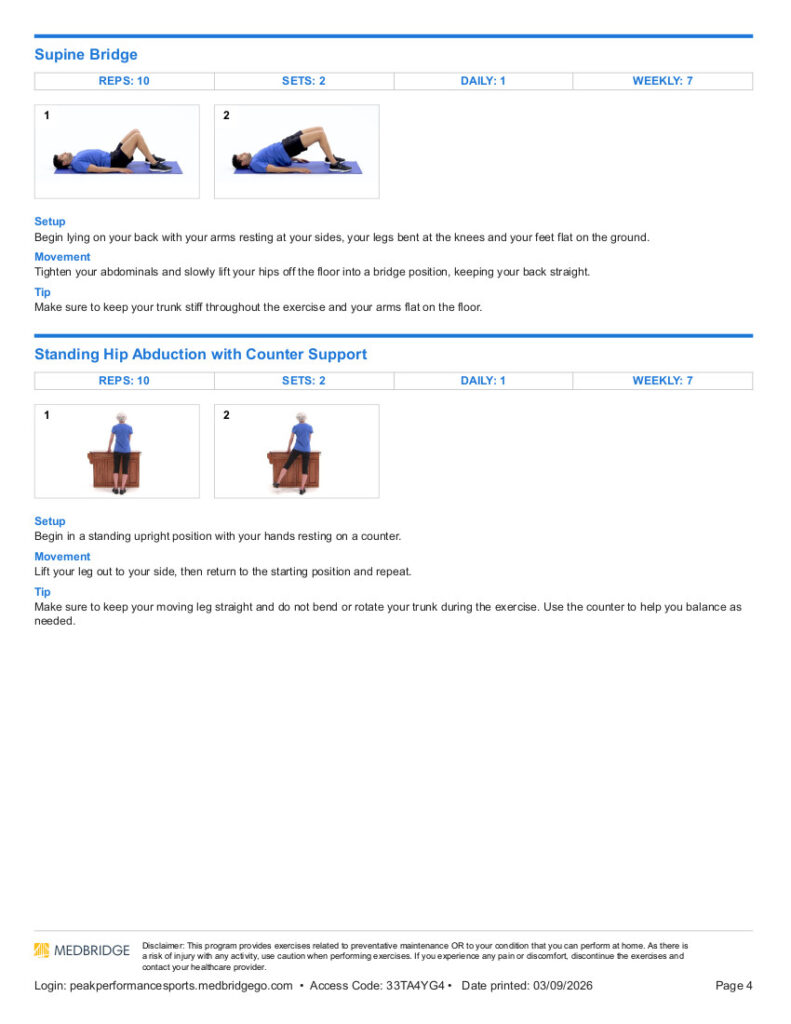
Stay Strong
Walk regularly
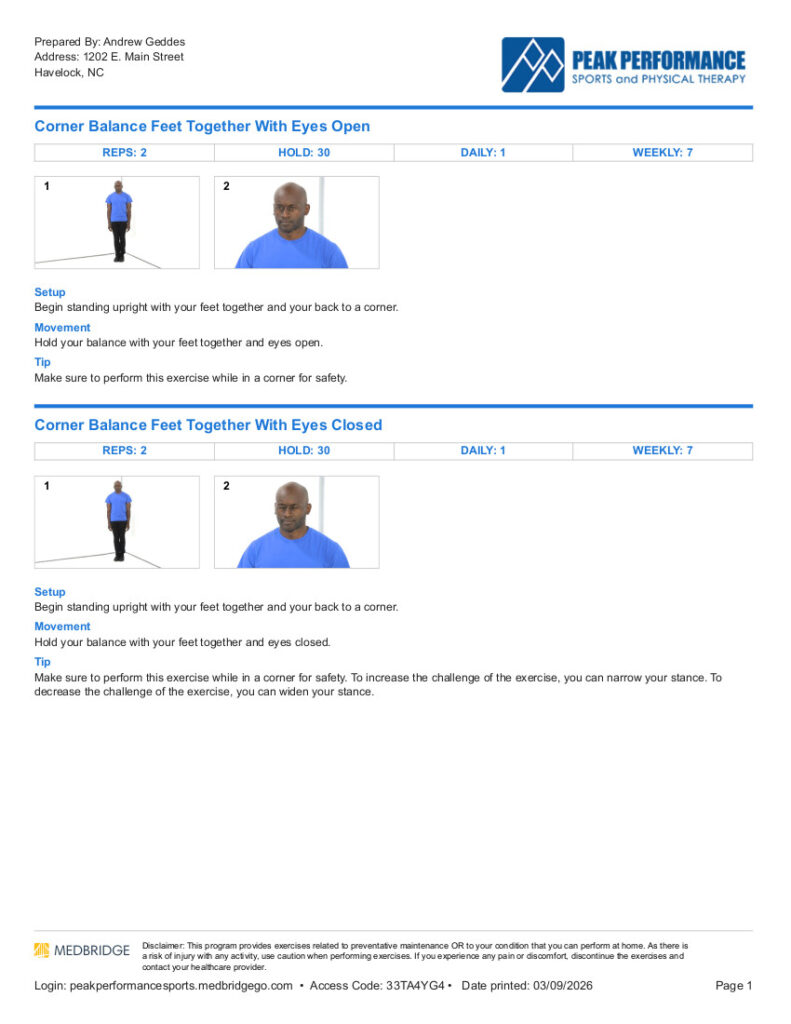
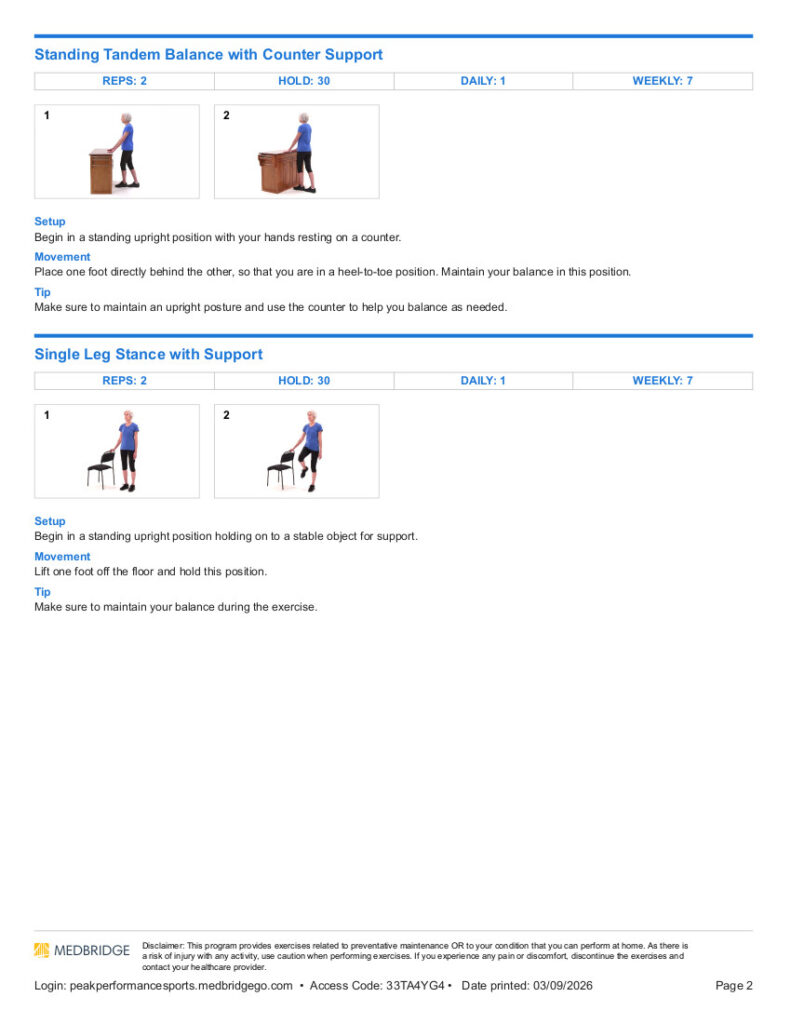
Try balance activities like tai chi
Use resistance bands or light weights
Talk to your doctor about Physical Therapy
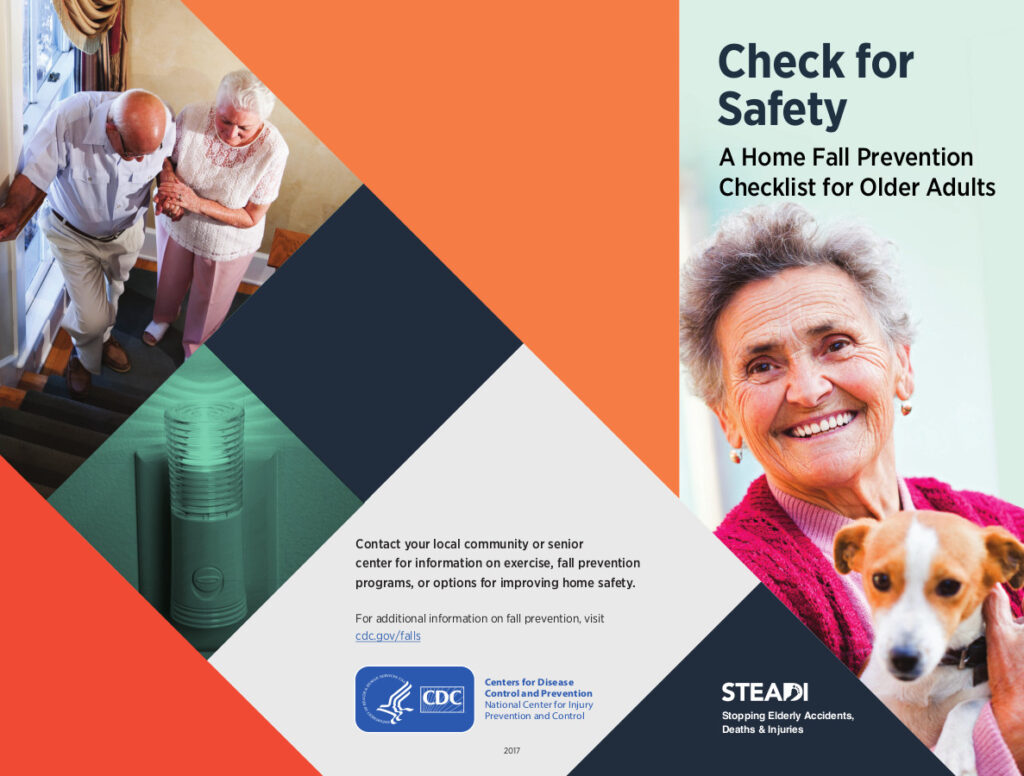
Home Safety
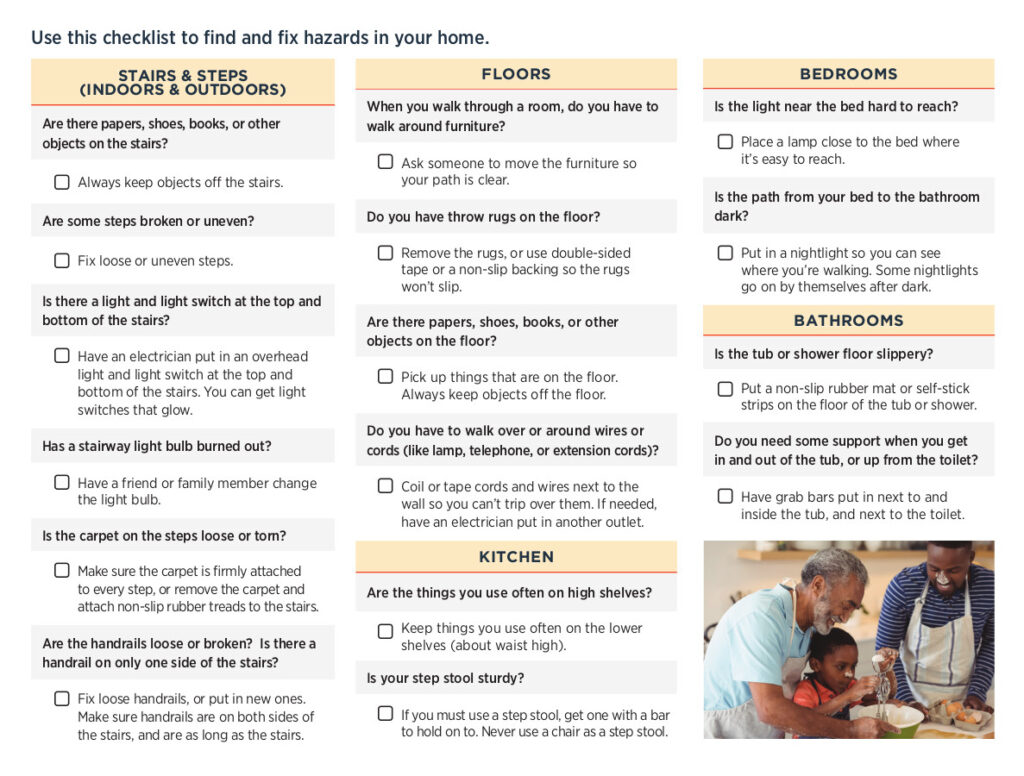
Remove clutter and secure/remove loose rugs
Add grab bars in bathrooms
Install railings on both sides of stairs
Improve lighting, especially at night
Use non‐slip mats in kitchen and bathroom
Check Your Health
Annual vision and hearing exams
Review medications with a healthcare provider
Manage chronic conditions
Stay hydrated
Use Helpful Devices
Canes or walkers fitted by a professional•
Non‐slip shoes
IF A FALL HAPPENS
Seek medical evaluation
Identify what caused the fall
Re-evaluate your fall prevention program
Potential Resources
STEADI (Stop Elderly Accidents, Deaths, and Injuries)
www.stopfalls.org
Down East Coalition for American Veterans (help with home modifications)
Physical Therapy
o Peak Performance Sports and Physical Therapy
Andrew Geddes, PT, DPT, OCS
(252)499-0828
[email protected]